
Father's Playbook
TX Safe BabiesParenting
4.10.00 Reviews
- Version
- 5.0.0
- Installs
- 10.00K
- Age Rating
- Everyone
Screenshots
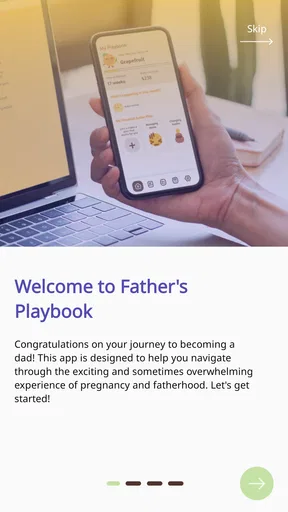
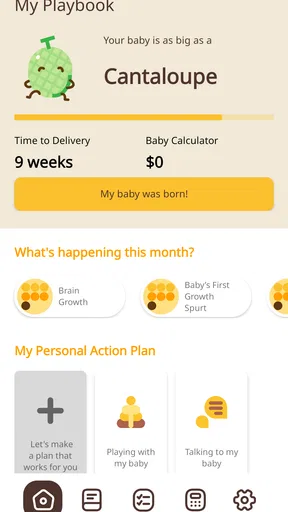
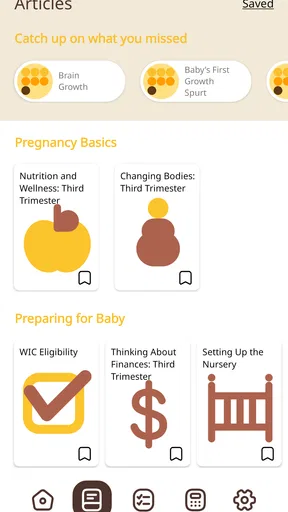
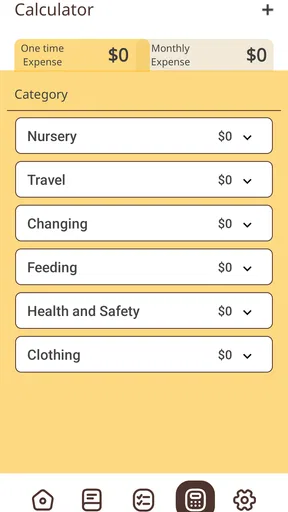
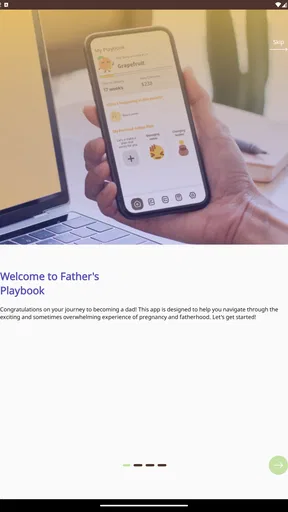
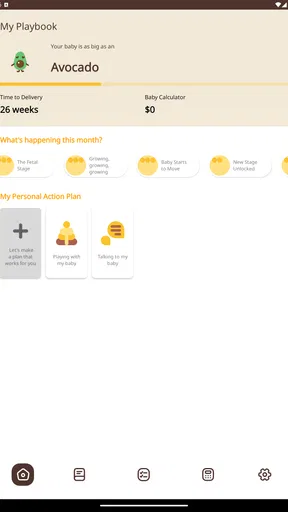
Our Review of Father's Playbook
 Analysis by Appyee
Fatherhood advice is often written for the pregnant person, while the partner is left trying to work out what to do, when to help, and how to stay involved without becoming another source of stress. Father's Playbook takes a more focused approach: it is a parenting app built around the father’s side of pregnancy and early family life. I found that focus more useful than a broad pregnancy tracker when the real problem is not counting weeks, but knowing how to participate thoughtfully.
The app comes from TX Safe Babies and is free to use. It is listed for everyone, so its intended audience is broad, although the subject matter is clearly aimed at expectant fathers and partners. The current release is version 5.0.0, and it runs on Android devices using version 7.0 or later. Its average rating is 4.1 from around thirteen ratings, with over ten thousand installs, which suggests a modest but real audience rather than a heavily established platform.
Why the father-focused capability matters
The most important capability here is not simply pregnancy information. It is the decision to filter that information through the question, “What can I do as a dad?” That change sounds small, but it affects how useful the advice feels. A standard pregnancy app may concentrate on fetal development, appointments, body changes, nutrition, or reminders. Those subjects matter, but they do not always tell a partner how to turn awareness into support.
In my experience, a father-focused guide is most helpful when it converts a passive role into a practical one. Instead of waiting to be told what is needed, I can use the app as a prompt to think ahead: prepare for a conversation, notice when my partner may need extra patience, or learn about a stage of pregnancy before it becomes urgent. The value is less about discovering one dramatic piece of information and more about making involvement habitual.
That distinction also explains why I would not treat this as a replacement for medical care. It is a companion for understanding the father’s role, not a diagnostic tool or a substitute for a midwife, doctor, childbirth class, or emergency service. If a question involves symptoms, medication, complications, or an urgent concern, professional advice remains the right next step.
The app’s short store description calls it a father’s playbook, and that is a better way to understand it than thinking of it as another calendar. A calendar tells me where I am in a process. A playbook encourages me to decide what to do with that knowledge. For a partner who feels uncertain or disconnected, that practical framing can be more motivating than another stream of general pregnancy facts.
Turning information into participation
The strongest use of this capability is preparation. I can read with a specific purpose instead of opening the app only when a question appears. For example, before an appointment, I might use the material to identify topics worth discussing together. Before a busy week, I might think about household tasks that can be handled without being asked. Before the birth, I might use the guidance as a starting point for conversations about preferences and responsibilities.
This is a subtle but important advantage. Advice directed at fathers can reduce the temptation to measure support only through large gestures. Pregnancy involves many ordinary moments, and a partner who consistently notices practical needs may be more helpful than someone who becomes enthusiastic only around major milestones. The app’s perspective encourages that everyday participation.
I also like the fact that this approach can support a father who is interested but inexperienced. Not everyone knows how to ask useful questions or recognize when “How can I help?” puts the entire planning burden back on the pregnant person. A focused guide can act as a bridge between good intentions and better behavior.
At the same time, readers should keep their expectations realistic. A father-oriented app cannot know the personality, health situation, culture, schedule, or relationship dynamics of every family. Its suggestions are most useful as prompts for conversation and action, not as rigid instructions. I would adapt what I learn rather than follow it mechanically.
How it fits into everyday use
I would use Father's Playbook in short sessions rather than treating it like a course that must be completed in one sitting. A few minutes during a commute, a lunch break, or a quiet evening can be enough to prepare for a conversation. The important habit is to connect reading with something concrete afterward. If a topic raises a concern, bring it up calmly. If it suggests preparation, choose one manageable task. If it explains an emotional change, respond with patience rather than trying to solve everything immediately.
A realistic example would be a couple approaching a demanding week. The pregnant partner has appointments, work deadlines, and less energy at home. The father opens the app to understand what kind of support may be useful, then turns that into action by taking responsibility for meals, transport, or routine errands. The app does not perform those tasks, but it can help him recognize that waiting for a detailed list is not always supportive.
That workflow reveals one of the app’s less obvious strengths: it can be used privately as a preparation tool, then discussed jointly. The father does not need to hand over the phone and announce that he has completed a lesson. He can absorb the idea, ask a better question, and make the information part of a normal conversation. This matters because support can feel uncomfortable when it becomes performative.
Another useful workflow is shared planning. After reading about a subject, I would write down one question for the next appointment or one decision the couple needs to make together. That keeps the app from becoming a one-sided source of knowledge. It also helps prevent a common problem with parenting apps: collecting information without changing what happens at home.
For a first-time father, the app can provide structure when everything feels unfamiliar. For a father who has already been through pregnancy, the benefit is different. He may use it to reconsider habits, support a partner whose current pregnancy is different, or become more intentional about emotional and practical involvement. The same father-focused angle can serve both audiences, but it will not replace personal experience or professional guidance.
One trade-off is that a focused app may feel narrower than a full pregnancy platform. Someone who wants appointment management, symptom logging, baby-size comparisons, nutrition records, or a detailed week-by-week medical reference may prefer a conventional pregnancy tracker. Father's Playbook makes more sense when the missing piece is the partner’s role, not when the user wants an all-in-one health dashboard.
The best scenario for the app
The ideal user is a father who wants to be involved but does not know where to begin. He may be nervous about saying the wrong thing, unsure which tasks matter, or guilty that pregnancy information seems designed for someone else. In that situation, the app’s narrow perspective is an advantage because it speaks directly to the person who often feels like a visitor in the process.
It is particularly well suited to couples who are willing to talk openly but need prompts. The father can read a topic, identify what applies to their situation, and start a conversation without pretending to have all the answers. That can be valuable during the early stages, when excitement and anxiety often appear together and both partners are still adjusting to the idea of becoming parents.
I can also see it helping a busy partner who cannot attend every appointment. Reading alone does not equal being present, but it can make the time he does have more meaningful. He can arrive with informed questions, understand the context of a decision, and take ownership of preparation at home. In that sense, the app may be most useful between appointments, where many practical choices actually happen.
Another strong scenario is when the father is emotionally reserved. Some people care deeply but express support through actions rather than conversation. A father-centered guide can give that person a starting point that feels practical: learn, prepare, organize, and follow through. It may be easier to begin with a task than with a long discussion about feelings.
However, I would not recommend relying on it alone when the couple is dealing with serious conflict, significant anxiety, or a complicated medical situation. Information can support a relationship, but it cannot repair communication by itself. In those circumstances, direct conversation and qualified professional help are more appropriate than any parenting app.
Where the focused approach has limits
The same specialization that makes the app appealing can also make it feel incomplete. Pregnancy is shared, but it is not experienced identically by both partners. A father-focused perspective can encourage empathy, yet it should not become a way for the father to claim equal authority over physical decisions or speak over the pregnant person’s experience. I would use the app to become more supportive, not to become the manager of someone else’s body.
There is also a risk of passive consumption. Reading a guide can create the comforting feeling of progress without any real change in behavior. I would avoid that by pairing every session with one action: ask a thoughtful question, take over a task, attend when possible, or make time to listen. If the app is opened only for reassurance and never influences daily choices, its value will be limited.
Because the audience is broad and the app is rated for everyone, parents should still apply judgment to the advice they encounter. A general guide cannot account for every family structure or every pregnancy. Some fathers will find the tone immediately relatable, while others may want more detail, more medical context, or a wider discussion of co-parenting. The right response is not to force a poor fit, but to combine the app with resources that cover those gaps.
I would also compare it carefully with the usual alternatives. A standard pregnancy tracker is better for monitoring a timeline and following physical development. A hospital or clinic resource is better for local care instructions and medical questions. A childbirth class is better for practicing decisions together and preparing for the birth itself. A parenting book may offer deeper explanation. Father's Playbook’s advantage is its accessible, father-specific starting point between those options.
That makes the app complementary rather than universal. If I already use a detailed pregnancy tracker, I would not install this expecting duplicate tracking features. I would add it when I want a different viewpoint: less “what is happening this week?” and more “how should I show up this week?” That is a meaningful distinction, but it will not matter equally to every reader.
Who gets the most from it
First-time fathers are likely to gain the most because they have the largest gap between wanting to help and knowing how. The app can give them language, prompts, and a practical mindset before uncertainty turns into avoidance. It is also useful for partners who work long hours, travel, or struggle to attend every stage of pregnancy, provided they turn what they read into active involvement.
It may also suit fathers who dislike overly technical health apps. The parenting category and father-centered framing make it feel less like a personal medical record and more like a guide for participation. That can lower the barrier to opening it regularly. The free price is another practical advantage for someone who wants to try the approach without committing money first.
On the other hand, I would skip it if I am looking for detailed clinical tracking, a social community, or a complete family organizer. I would also look elsewhere if I want content tailored closely to a specific medical condition or if I prefer long-form expert reference material. In those cases, a healthcare provider, specialist resource, or more comprehensive pregnancy platform is a better primary choice.
The app’s audience size gives me a modest expectation rather than the feeling that I am joining a massive ecosystem. Around ten thousand installs show that it has reached people, but the small review count and 4.1 average mean I would judge it by personal usefulness instead of popularity. For a focused tool, that is reasonable: its success depends more on whether its perspective matches my needs than on how many people have downloaded it.
TX Safe Babies has positioned the product around a clear problem: fathers can be present physically while remaining uncertain about how to contribute. The answer is not perfect, and no app can make someone a supportive partner automatically. Still, I appreciate the attempt to give fathers their own entry point into pregnancy rather than treating them as secondary readers of someone else’s tracker.
My final take on the father’s playbook
I see Father's Playbook as a useful companion for the father who wants practical direction, especially during a first pregnancy. Its central capability—putting pregnancy guidance into a father-focused frame—has a real effect because it changes passive awareness into possible action. The best results come when I read briefly, discuss what matters, and immediately take responsibility for something specific.
It is not the right choice as a medical authority, a full pregnancy monitor, or a replacement for honest communication. Those limitations are important, but they do not cancel out its main strength. When the problem is “I care, but I do not know how to be useful,” a focused playbook can be more approachable than a general-purpose app.
For a free parenting app from TX Safe Babies, I think the sensible approach is to try it alongside—not instead of—the resources already guiding the pregnancy. If its father-centered prompts help me listen better, prepare earlier, and take initiative without taking control, then it is doing something worthwhile. The real benefit is not reading more about pregnancy; it is becoming a more dependable partner during it.
Verdict
Strengths of Father's Playbook
- Practical parenting tips are easy to scan during busy family routines.
- Content can help fathers approach common parenting challenges with more confidence.
- Playbook-style guidance makes it simple to revisit useful advice later.
- Topics may encourage more intentional involvement in everyday family life.
- A focused design can feel less overwhelming than broad parenting platforms.
Limitations of Father's Playbook
- Advice may not reflect every family structure, culture, or parenting situation.
- Some recommendations could feel too general for complex family challenges.
- The app may offer limited value to parents seeking expert medical guidance.
- Frequent users may find the content repetitive after covering familiar topics.
- Useful features may depend on regular updates and continued content additions.
Similar Picks in This Category
View All
Family Space
Motorola Mobility LLC.3.9

شرطة الأطفال - مكالمة وهمية
Oub Apps4.1

Findmykids: Parental Control
LETEM LTD4.6

Pregnancy + | Tracker App
Philips Electronics UK Limited4.8

Policía de niños - para padres
Kids police4.7

Pregnancy App
Amila4.9
Frequently Asked Questions
What is Father’s Playbook, and who is it designed for?
Father’s Playbook is a parenting app focused on helping dads organize family life, build stronger relationships with their children, and find practical guidance for everyday parenting situations. It is generally aimed at fathers of young children through the teenage years, although many of its ideas may also be useful for co-parents, guardians, and anyone who wants a more intentional approach to family activities and responsibilities.
What features can I expect to find in Father’s Playbook?
The app typically combines parenting advice, activity ideas, reminders, planning tools, and suggestions for spending meaningful time with children. Depending on the version and device, you may also find age-related guidance, family organization features, and content designed to encourage communication and involvement. Before downloading, check the current store listing because available tools, categories, and included content can change with updates.
Is Father’s Playbook free to download and use?
Father’s Playbook may be available as a free download, but some features or content could require in-app purchases, a subscription, or an upgraded account. The exact pricing model can vary by platform, region, and app version. We recommend reviewing the Google Play or App Store listing carefully, including trial terms and recurring billing details, before confirming any purchase.
Does Father’s Playbook provide professional medical or parenting advice?
Father’s Playbook should be treated as a source of general parenting information, ideas, and encouragement rather than a replacement for professional advice. Parenting recommendations may not suit every child, family, or situation. For concerns involving health, development, safety, mental well-being, or serious behavioral issues, consult a qualified pediatrician, psychologist, counselor, or other appropriate professional instead of relying only on app content.
Does Father’s Playbook require an internet connection or collect personal information?
Some parts of Father’s Playbook may work offline after installation, while account features, synchronization, updates, media, or subscription verification may require an internet connection. Because parenting apps can involve profiles, preferences, reminders, or family-related information, review the app’s privacy policy and requested permissions before use. Avoid entering sensitive details about children unless you understand how that information is stored and shared.
